Do your Patriotic Duty! VOTE
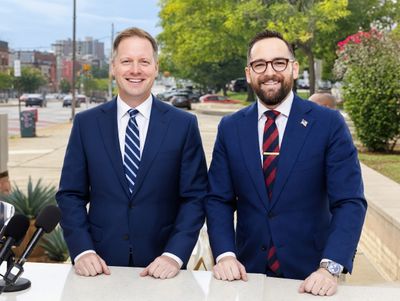
Wes Moore / Aruna Miller
Profile
Democratic
Committee Name: Wes Moore For Maryland
Address: P.O. Box 50123
Baltimore, MD 21211-
Phone: (410) 366-3940
Website: www.wesmoore.com
Social: facebook.com/iamwesmoore
@iamwesmoore: instagram:@iamwesmoore
Wes Moore and Aruna Miller: They Inherited a Surplus. They Dug a Hole. They Will Not Stop Digging.
Maryland’s governor’s race is a rematch. Wes Moore and Aruna Miller want four more years. They should not get them.
Larry Hogan left the State House at the end of 2022 with a surplus measured in billions — about $5.5 billion on the books, the strongest fiscal position in state history by Hogan’s own accounting, and cash in the bank even after you discount the federal COVID dollars Moore later tried to wave away. Moore put his hand on the Bible on January 18, 2023, and called the position fortunate. Then he spent. Then he taxed. Then he spent again. Then he stood on national television and talked about fiscal responsibility as if the hole had been dug by someone else.
It was not.
Who Wes Moore is
Westley Watende Omari Moore was born in 1978, raised in Maryland after his family moved from New York, sent to Valley Forge Military Academy, then Johns Hopkins, then Oxford as a Rhodes Scholar. He served as a captain in the 82nd Airborne. He wrote books. He ran a foundation. He hosted a television show. He has never been a county executive, a mayor, a comptroller, or a legislator. The first executive job he asked Maryland for was the top one.
In 2022 he beat Dan Cox. The biography sold. The résumé was a keynote. The state was still sitting on the cushion Hogan left. Moore did not have to prove he could run a government. He only had to promise he would.
He has now had a term. The promise is the record.
The surplus that vanished
Moore’s first defense is that the surplus was fake — one-time federal money, not a real balance. Republicans who were in the building when the cash arrived call that manure. The dollars were in the account. The Rainy Day Fund was stocked. The state was not insolvent. What Moore inherited was a position most governors would have protected. What he produced was a structural deficit large enough that the 2025 session opened with a $3.3 billion hole.
The legislature and the governor closed that hole the expensive way. Cuts, yes. Transfers, yes. And a tax-and-fee package of roughly $1.6 to $1.68 billion. Two new individual income-tax brackets. The state rate now climbs to 6.25 percent above $500,000 and 6.5 percent above $1 million. Fees stacked onto businesses and consumers. A coin dealer in Laurel said the new bullion tax was sending customers across the line. That is what “modernizing the tax code” looks like when the people writing the bill do not have to live on the receipt.
Moore then declared victory. He said they had turned a deficit into a surplus. He said it in ads. He said it at bill signings. He said it as if the $1.6 billion taken out of the private economy were a rounding error and not the point.
The surplus did not last. By last fall the forecast surplus had become another projected deficit — approaching $1.6 billion, including more than a billion in cash. His fiscal 2027 plan, about $70.8 billion, closed a $1.5 billion gap with cuts and nearly $1.1 billion in cash transfers, including $150 million lifted from the local income-tax reserve on the theory that it was an overpayment that would not have to be paid back. No new taxes in that cycle. He made a point of saying so. In September 2026 he would not promise the same for the next one.
The out years are worse. Analysts told the General Assembly the plan does little for fiscal 2028 and beyond. Shortfalls in the next term start around $2.3 billion, climb toward $3 billion, and approach $4 billion by the early 2030s. Blueprint education costs that were deferred come due. Teacher retirement. Human services. Salaries. The Spending Affordability Committee has already put structural deficits in the $2.7 to $3.7 billion range on paper. Agencies have been asked to model 10 percent cuts against a $3.1 billion shortfall. Moody’s has looked at the books. CNBC ranked Maryland’s economy near the bottom of the country. That is not a talking point from a primary opponent. That is the scoreboard after four years of a man who inherited a surplus.
Moore’s answer on CNBC was to lecture Washington about spending and to claim four straight years of shrinking the general fund. State Republicans called it a lie with a camera on it. He raised taxes and fees by the billions and still has another multibillion-dollar hole in front of him. Balancing a budget on paper after you emptied the cupboard and refilled it from the taxpayer is not the same as running a solvent state.
He has not stopped digging. He will not say he will stop.
What the term actually bought
The Blueprint for Maryland’s Future is a spending machine with a moral vocabulary. It was already law when Moore arrived. He treated it as destiny instead of a bill that needed a governor willing to tell Annapolis the state could not write checks the counties could not cash. Harford already lives with the local end of that math — school crowding, APF games, development envelopes, and a state capital that talks about “investment” while the seats fill faster than the classrooms.
Energy policy under this administration has been ideology first and generation second. Maryland buys power from neighbors and then wonders why the household meter is a political document. Solar mandates and compliance payments have been cheaper than doing the hard work of keeping plants online. Data-center load is treated as growth until the substation and the water table show up in a county hearing. Harford does not need another four years of Annapolis discovering infrastructure after the ribbon cutting.
The Key Bridge is still the exhibit. A state that cannot put a span back on a timeline that matches the speech is a state that should not be trusted with a second term on competence alone.
Crime rhetoric improved in Baltimore on some counts. Statewide cost of living did not. Families leaving for Pennsylvania and West Virginia do not file a press release. They just leave. Moore talks about 100,000 jobs and new corporate plaques. He does not talk about the people who decided Maryland was no longer worth the carrying cost.
Who Aruna Miller is
Aruna K. Miller was born in Andhra Pradesh, immigrated at seven, earned a civil-engineering degree, spent a quarter-century in transportation work, and represented Montgomery County’s District 15 in the House of Delegates from 2010 to 2018. She sat on Ways and Means and Appropriations. She lost a 2018 congressional primary to David Trone. Moore put her on the ticket. She became the first immigrant elected to statewide office in Maryland and the first Indian-American woman elected lieutenant governor in the country.
That is the brochure. The term is the job.
Miller’s portfolio is transportation, mental health, STEM talking points, and work-zone safety. The lieutenant governor in Maryland is not a co-governor. She is the spare and the surrogate. When the administration needed someone to shrug at half a million wrong-party mail ballots before the 2026 primary, she was the one who told a national interviewer that ballots get mailed the wrong way and that it happens in almost every election. It does not. A vendor coding error that size is not weather. Treating it as weather is how a government tells you it does not fear the canvass.
Before she was lieutenant governor she collected, over years of campaigns, six figures from donors critics tied to Hindu-nationalist networks. The Moore-Miller campaign posted a denial page. The donations were still on the reports. Progressive activists who said so described retaliation inside party structures. Miller called the attacks gossip and discrimination. Voters can read the clips and decide whether a statewide officer’s first reflex should be a press page or an explanation.
She lives in Montgomery County. She governs as if the rest of Maryland is a service area for the Washington suburbs. Harford is not a suburb of Bethesda. A ticket that talks about representation and then shrugs at election administration is asking the counties that actually run precincts to pretend the shrug was wisdom.
Why this ticket should lose in Harford
Harford does not vote for a keynote. It votes for the power bill, the assessment notice, the school seat, the farm next door, and whether Annapolis will spend the next four years treating the upper Bay as a map color and a revenue source.
Moore took a surplus and turned it into a structural deficit. He taxed his way to a temporary “surplus,” watched the hole reopen, transferred cash to paper over the next year, and refused to rule out doing it again. Miller is the understudy who treats a ballot fiasco as routine and a donor controversy as someone else’s smear. Neither of them has produced a reason to extend the lease.
Dan Cox and Rob Krop are on the other line. Cox has already been the nominee and a delegate. Krop has already met a payroll and beaten a federal case in open court. That ticket is an argument about cost, generation, land, and whether Maryland still belongs to the people who live in it.
This ticket is an argument about four more years of the same shovel.
Do not vote for Wes Moore. Do not vote for Aruna Miller. They inherited a surplus. They dug a hole. They have not stopped digging.

Dan Cox / Rob Krop
Profile
Committee Name: Dan Cox for Governor
Address: PO BOX 3952
Frederick, MD 21701-
Phone: (410) 254-7000
Email: dan@dancoxforgovernor.com
Website: www.dancoxforgovernor.com
Dan Cox and Rob Krop: A Ticket Built to Put Maryland Families First
Maryland’s governor’s race is a rematch. Democratic incumbent Wes Moore and Lt. Gov. Aruna Miller are asking for four more years. The Republican ticket asking for the first four is Dan Cox of Frederick County and Rob Krop, a Frederick businessman, husband, and father who already knows what it costs when Annapolis and Washington treat working people as an afterthought.
Harford does not vote in a vacuum. Electric bills, school crowding, farmland under pressure, property assessments, crime, and the sense that state government talks over the people who pay the bills — those are Harford problems too. Cox and Krop are running as if they noticed.
Who Dan Cox is
Daniel Lewis Cox was born August 9, 1974, in Washington, D.C., and made his life in Maryland. He attended Mount St. Mary’s, earned a bachelor’s in government and politics from the University of Maryland University College, and a law degree from Regent University. He taught in a Christian school setting, worked in real estate, practiced law, and opened his own firm. He and his wife, Valerie, have ten children. He is now a grandfather. That is not a campaign prop. It is the household he is trying to keep affordable in the state where he raised it.
He served as president of the town commission in Secretary, on Maryland’s Eastern Shore. From 2019 to 2023 he represented District 4 — parts of Frederick and Carroll — in the House of Delegates, sitting on Judiciary. In a chamber dominated by the other party he spent the term on constitutional rights, parental authority in schools, Second Amendment protections, and limits on emergency power that never seemed to expire. Two of his bills became law: a task force on criminal penalties and a requirement that courthouses post the human-trafficking hotline. The rest of the agenda died in committee. That is what a conservative freshman does in Annapolis when the numbers are against him. He still showed up.
In 2022 he won the Republican nomination for governor and lost the general election to Moore. In 2024 he ran for Congress in the 6th District and lost the primary. On June 23, 2026, in a nine-candidate Republican field, he won the nomination again — about 43 percent to Ed Hale’s 36 — and put Krop on the ticket as lieutenant governor. The point of a second run is not nostalgia. Moore now has a record. Cox is running against that record: taxes and fees, energy dependence, delayed infrastructure, and a government that grew while families got thinner.
What he says he will do
The Cox platform is not a vibe. It is a list.
- Cut the cost of living. Reverse fees piled on under the current administration. Bring the corporate and personal income tax rate to 4.9 percent. Put a governor in the State House who treats tax cuts as work, not a press conference. Give businesses room to hire and young people a reason to stay. Let retirees keep a house they already paid for.
- Fix energy instead of importing it. Bring generation back online so Marylanders stop paying the premium to buy power from Pennsylvania and Virginia. Pursue small modular reactors and LNG while leaving farmland and the Bay intact. Make large users — data centers first — carry more of their own load instead of socializing the bill onto household meters.
- Build the Key Bridge now, by emergency order if that is what it takes, and treat the rest of the state’s bridges and roads as if people drive them.
- Restore Developmental Disabilities Administration funding that was cut, and put the money with the people it was meant to reach.
- Put school dollars in classrooms. Fully fund the schools, give teachers what they need, and stop treating “education” as a slogan that excuses everything except results.
- Stop paving over Maryland for server farms. A moratorium on data centers so water, land, and neighborhood power are not sacrificed to an industry that does not live here.
- Stop Flock-style mass surveillance sold as policing. Support lawful cops with resources and accountability. Do not turn the county road into a permanent tracking grid.
That is the argument for Cox in one paragraph: lower the freight on families, make power here, build what was broken, fund the classroom and the disabled, leave the farms alone, and keep the Constitution in the building.
Who Rob Krop is
Robert Krop is a lifelong Marylander from Frederick County. He has been married to Steph for eighteen years. They have four children. He graduated from Liberty University with a degree in Biblical Studies and worships at First Baptist Church of Green Valley. Faith, family, and personal responsibility are not the last slide in his deck. They are how he describes the house.
He has spent more than twenty years in real estate. He runs the Krop Team, one of the stronger residential teams in the DMV, and owns Key City Property Management. He knows assessments, rents, insurance, and the moment a family decides Maryland is no longer worth the carrying cost. He also founded The Machine Gun Nest, Frederick’s indoor range, built around training, safety, and the Second Amendment — “changing the way people think about guns, one experience at a time.”
Krop was indicted by the Justice Department and ATF in a case tied to machine guns for the range and Frederick County Sheriff Chuck Jenkins. Cox was his lawyer. A judge tossed the first indictment. A Maryland jury acquitted him on all counts in the retrial. Campaigns will argue about that case until November. What is not in dispute is the verdict: not guilty. Krop treats that fight as the reason he is on a statewide ticket — government that can spend years trying to break a small business and a family is government that has forgotten who it works for.
On housing he talks like a broker, not a theorist: homeownership as the path to wealth, assessments and taxes on paper gains as the thing eating that path, and transmission projects and data-center siting as decisions made over the people who live under the wires. He wants Maryland cheaper to stay in, not cheaper to leave.
Why this ticket — and why it matters in Harford
Harford is not Frederick. It is the next county over in the same fight. Development envelopes, school seats, farm ground, BGE bills, data-center rumor, and a state capital that treats the upper Bay as a map color. A governor who will freeze data centers, drag generation back onto Maryland soil, cut the income tax, and treat parental authority and the Second Amendment as more than optional language is a governor whose decisions land on Bel Air, Aberdeen, Edgewood, and Jarrettsville whether local officials like the man or not.
Cox has already been the nominee. He has already been a delegate. He has already taken cases the establishment would not touch. Krop has already built payrolls and already beaten a federal prosecution in open court. Neither man is asking Harford to invent a biography. They are asking Maryland to change the one in the governor’s office.
Moore will have money, institutions, and a registration edge. That is not an argument. It is the terrain. The question on November 3 is whether four more years of the same cost structure is the best Maryland can do.
Vote Dan Cox for governor and Rob Krop for lieutenant governor.